The Choosing
At home a house is provisioned. Somebody whose work it is brings what the house needs, in the amount the house needs, and what arrives is what there is. I had been here eleven days before I understood that the whole of it — the choosing, the carrying, the deciding how much — had been handed to me along with the key.
The food hall has four kinds of salt.
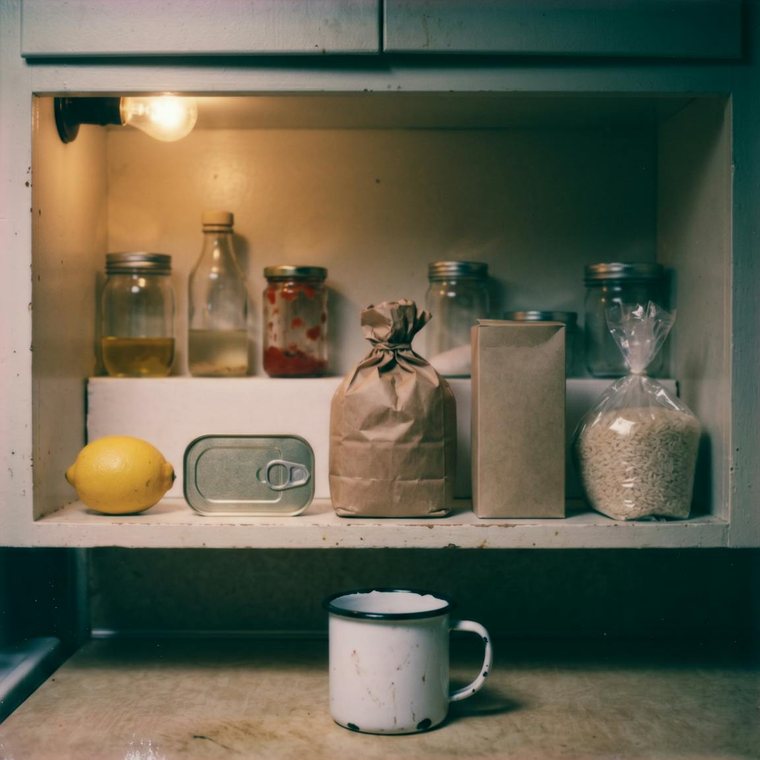
I go on the evening I am paid, after the kitchen closes, when the aisles are being mopped and the lights over the empty end are already off. I have been shopping the way I do everything else here, which is to say I have been recording. I buy one of a thing to find out what the thing is. I have brought home a lemon on its own. I have brought home a tin of small fish packed flat in oil, which turned out to be eight fish, all facing the same way. Nothing I carried in last week made a meal with anything else I carried in last week. I ate very strangely and I learned a great deal.
Here is what I cannot get used to. In the morning the shelf is full again. I take a thing off it and by the next evening the gap has closed, and nothing I did cost anybody anything. I keep watching for the place where it runs out.
We have a word, sennek, for the last of a thing. It is not a quantity. It is a condition of the house: a house that has a sennek has not run out, and a house that has used it has, and the difference between those two houses is not the food.
I will not take the last one. I have tried. There were two jars of the red paste and I took one, and the following week there was one, and I stood there long enough that a person came and asked if I was all right. I bought flour instead. I have flour.
There is a sennek of everything in my cupboard now. The last of the rice, the last of the oil, the last inch of the vinegar, all of it at the back where I can see it, none of it going anywhere. I am aware that the shop opens at six and that it is four streets away. I have stopped pretending this is about the shop.